
Desertcart purchases this item on your behalf and handles shipping, customs, and support to Togo.
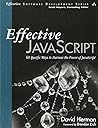
“It’s uncommon to have a programming language wonk who can speak in such comfortable and friendly language as David does. His walk through the syntax and semantics of JavaScript is both charming and hugely insightful; reminders of gotchas complement realistic use cases, paced at a comfortable curve. You’ll find when you finish the book that you’ve gained a strong and comprehensive sense of mastery.” ―Paul Irish, developer advocate, Google Chrome “This is not a book for those looking for shortcuts; rather it is hard-won experience distilled into a guided tour. It’s one of the few books on JS that I’ll recommend without hesitation.” ―Alex Russell, TC39 member, software engineer, Google In order to truly master JavaScript, you need to learn how to work effectively with the language’s flexible, expressive features and how to avoid its pitfalls. No matter how long you’ve been writing JavaScript code, Effective JavaScript will help deepen your understanding of this powerful language, so you can build more predictable, reliable, and maintainable programs. Author David Herman, with his years of experience on Ecma’s JavaScript standardization committee, illuminates the language’s inner workings as never before―helping you take full advantage of JavaScript’s expressiveness. Reflecting the latest versions of the JavaScript standard, the book offers well-proven techniques and best practices you’ll rely on for years to come. Effective JavaScript is organized around 68 proven approaches for writing better JavaScript, backed by concrete examples. You’ll learn how to choose the right programming style for each project, manage unanticipated problems, and work more successfully with every facet of JavaScript programming from data structures to concurrency. Key features include Better ways to use prototype-based object-oriented programming Subtleties and solutions for working with arrays and dictionary objects Precise and practical explanations of JavaScript’s functions and variable scoping semantics Useful JavaScript programming patterns and idioms, such as options objects and method chaining In-depth guidance on using JavaScript’s unique “run-to-completion” approach to concurrency Review: With great Power comes great Responsibility - Although it's been around for almost 20 years, JS doesn't have a well established standard - the gap between different hosting environments and other important issues are not covered by ECMAScript specification. JS is a very powerful and dynamic language to begin with, which without correct guidance may lead you to fundamental mistakes, struggling with unanticipated, untraceable bugs and inefficient computing. I find this book to be the 'missing guide' on how to bridge over these gaps and level up your knowledge of JS. This book covers 68 principles of JavaScript programming in an intelligent, concise and clear manner. It focuses mainly on pitfalls and best practices to avoid them by writing better, robust code. 68 items may sound a bit cumbersome, but the explanations are very clear and the reading direction is forward - rarely, if at all, do you need to hop back and forth between items to understand what you're currently reading. The items span several topics: * general JavaScript idioms - this is not a beginner's introduction, but more of a review over the language strengths and weaknesses * variable scopes - best practices regarding global objects and other scope concerns * functions - the identity of functions as traditional functions, methods and closures. how to use them properly in terms of context ('this' object) * objects/prototypes - the identity of objects as classes/interfaces - proper prototyping and inheritance * arrays - how to leverage standard Array API and common pitfalls * API design - tips on how to write a concise and unambiguous API (be it for public use or your own code base) * concurrency - guidelines for writing asynchronous functions properly and a brief description of Promises. Review: JavaScript's "Missing Manual" - Looking for resources to help you maximize your learnings and minimize your time use is often fruitless. Publishing deadlines cut books short, real life gets in the author's way, and personal preference, well there isn't much you can do about that. In many ways, this book is an oddity. The voice is at ease, nothing is crammed down your throat and it doesn't feel like he was slamming caffeinated beverages just to get it done. It is refreshing being the recipient of an exposition that not only teaches you, but questions you, and sets expectations of you and what you should learn. The book is broken up into 68 different lessons, and it ends up being a perfect approach. It gives you time to pick it up when you are free and dig as deep as you want. It also is very humble, the sections make the point and pose the advice, and if you don't grok it then you had better revisit it. Again, it makes for peaceful and pleasant reading, without sacrificing the seriousness or even urgency of the valuable points contained within. Books like this are few and far between, at least when it comes to industrial concerns. This book is a gem for the JavaScript technology, because it poses the technology for thoughtful grownups instead of obsessing over the 24h tricks, recipes of the week, and "one way to do it right", it will be a timeless contribution that will always be valued. Just like the author said, it is not for new learners of the language, it is for experiences programmers who have gotten through the first 80% and now want to master the remaining 80%. On the Kindle it looked great, text, code, and pictures. In my eyes, this is the missing manual that should have gone out with ECMA-262. 5/5
| Best Sellers Rank | #771,017 in Books ( See Top 100 in Books ) #132 in JavaScript Programming (Books) #508 in Software Design & Engineering #1,032 in Software Development (Books) |
| Customer Reviews | 4.7 out of 5 stars 231 Reviews |
C**H
With great Power comes great Responsibility
Although it's been around for almost 20 years, JS doesn't have a well established standard - the gap between different hosting environments and other important issues are not covered by ECMAScript specification. JS is a very powerful and dynamic language to begin with, which without correct guidance may lead you to fundamental mistakes, struggling with unanticipated, untraceable bugs and inefficient computing. I find this book to be the 'missing guide' on how to bridge over these gaps and level up your knowledge of JS. This book covers 68 principles of JavaScript programming in an intelligent, concise and clear manner. It focuses mainly on pitfalls and best practices to avoid them by writing better, robust code. 68 items may sound a bit cumbersome, but the explanations are very clear and the reading direction is forward - rarely, if at all, do you need to hop back and forth between items to understand what you're currently reading. The items span several topics: * general JavaScript idioms - this is not a beginner's introduction, but more of a review over the language strengths and weaknesses * variable scopes - best practices regarding global objects and other scope concerns * functions - the identity of functions as traditional functions, methods and closures. how to use them properly in terms of context ('this' object) * objects/prototypes - the identity of objects as classes/interfaces - proper prototyping and inheritance * arrays - how to leverage standard Array API and common pitfalls * API design - tips on how to write a concise and unambiguous API (be it for public use or your own code base) * concurrency - guidelines for writing asynchronous functions properly and a brief description of Promises.
G**R
JavaScript's "Missing Manual"
Looking for resources to help you maximize your learnings and minimize your time use is often fruitless. Publishing deadlines cut books short, real life gets in the author's way, and personal preference, well there isn't much you can do about that. In many ways, this book is an oddity. The voice is at ease, nothing is crammed down your throat and it doesn't feel like he was slamming caffeinated beverages just to get it done. It is refreshing being the recipient of an exposition that not only teaches you, but questions you, and sets expectations of you and what you should learn. The book is broken up into 68 different lessons, and it ends up being a perfect approach. It gives you time to pick it up when you are free and dig as deep as you want. It also is very humble, the sections make the point and pose the advice, and if you don't grok it then you had better revisit it. Again, it makes for peaceful and pleasant reading, without sacrificing the seriousness or even urgency of the valuable points contained within. Books like this are few and far between, at least when it comes to industrial concerns. This book is a gem for the JavaScript technology, because it poses the technology for thoughtful grownups instead of obsessing over the 24h tricks, recipes of the week, and "one way to do it right", it will be a timeless contribution that will always be valued. Just like the author said, it is not for new learners of the language, it is for experiences programmers who have gotten through the first 80% and now want to master the remaining 80%. On the Kindle it looked great, text, code, and pictures. In my eyes, this is the missing manual that should have gone out with ECMA-262. 5/5
S**.
One of the best books I've read
From the legendary Effective series, this book is lives up to it's standard. It goes deep into the language in a series of 68 topics. It's very good at breaking down and explaining topics and contains a wealth of knowledge. It actually explains intricate details about JavaScript semicolon insertion, implicit coercions, and a lot of other goodness like implicit binding of "this". A lot of subjects are already covered in other books, but this book actually explains them in more detail and why things the way they are. It's not overly complex but it is very dense with information and joy to read. This is a must read for any serious developer who wants a deeper understanding of the JavaScript language.
R**G
Soon to be a Classic, Just Like its Namesake
This is clearly an extraordinary book, worthy of its namesake, "Effective Java" by Joshua Bloch, which has attained the status of being "a classic", since its publication in 2001. This book, "Effective Javascript", is sure to attain the same status. It's easy to tell when a subject is being explained to you by someone who understands a subject at its core and is in touch with its essence. With so many books on Javascript (and I've read a lot of them), you come away with the impression that they were written for the sake of being able to say, "I wrote a book", not really giving you better insight into the subject matter. But, those authors apparently felt they could study up on the material and phrase things better than others. Consequently, you come out knowing pretty much what you knew going in, but with just a slightly different slant on the topics. This book, however, is a complete shift in that pattern. You'll come away possessing a greater intimacy with Javascript. Update 7/19/2015: I'm taking away one star, not because of the anything that reflects on the author, or the quality of the content presented, but because the publisher is an inattentive dullard when it comes to making sure the formatting of the Kindle edition is right. Things like (10 + 20) + 30 come out looking like (10 2+0) 3+0. See attached screenshot. It ruins an otherwise great book. My advice to David Herman is, next time you write a book, don't choose Addison-Wesley Professional because they do no honor to an otherwise excellent book.
J**A
A easy to read book that represents Javascript well
I have programmed in C, C++, Clipper(remember DBase?), Fortran, Java (since beta), Groovy, Python,TCL, basic, PHP, and Javascript. Those are just the ones I can remember right now. I have read many programming books over the years. This one is definitely one of the better ones. It's a nice easy read that gave me a few new ideas (I get stuck in classical thinking a lot). Unlike most programming books I sat down and read it from cover to cover (on a Kindle app... so I guess from 0 to 100 percent would be more accurate). The book in general does a good job of representing the true essence of the Javascript language. I think it is important to understand a languages perspective in order to use them effectively. This book lives up to its name.
R**S
Great graduating material after you've conquered the basics! (And good for reinforcing those!)
I'm a designer turned front-end developer. I came to this book from Cody Lindley's "JavaScript Enlightenment." These two books in that order should be required reading for all designers picking up JavaScript. Skip "The Good Parts" and "Eloquent" and go straight for these meaty, easy to understand volumes. This is like the big brother of JavaScript Enlightenment. It introduces intermediate to advanced concepts. It's a concise volume with small code examples you can easily follow. Some of the concepts you may not get right away, but each chapter of the book will start simple, offer you something you didn't know about JavaScript, and stretch your understanding a little bit more. You might need to read it twice, but take your time. Like a ballerina doing her stretches at the bar, you might not feel like you're getting anywhere fast, but you're doing your career a world of good with each stretch you take.
I**R
Useful tips for experienced JavaScript developers
This is book for advanced JavaScript developers, I as intermediate JavaScript developer found myself rereading some chapters for two or three times. First there was some JavaScript syntax that I was not familiar with or there were concepts that I was not aware of. But with rereading the chapter you will get the authors point. For me it was good reference because it explained me the difference between object oriented languages (in which I have more experience) and JavaScript. There are tips and tricks that are very effective and can save you a lot of time in development. In my opinion this is not a book for JavaScript beginners, I will recommended to all intermediate and advanced JavaScript developers.
M**E
Great book for insight into JS
So far I'm only up to Item 40 in the book but I must say that each item I've read so far gave me insight to the ins and outs of JavaScript that confused me for a while. For example in the book it teaches things like Object.prototype.toString.call([]) will give you "[object Array]" and this is a way to tell if a variable passed into a function is actually an array. I would highly recommend this book to help clear up stuff like that along with some good tips for general coding in JS (watching out for automatic semicolon insertion, etc...), what the differences between __proto__, prototype are.
A**T
A great cookbook-style JavaScript reference
Not necessarily for the JavaScript beginner, as some of the things covered in the book cover strategies for more advanced uses of the language. Great as a reference and as an aid to people wanting to do JavaScript seriously - prototypal inheritance, API do's and dont's, language gotchas, and more are inside. Worth picking up if you're on the path to properly understanding JavaScript, not just throwing a few things on a page with jQuery.
F**I
Une saine lecture
Cet ouvrage s'adresse à un public qui connaît déjà javascript mais qui ne sait pas toujours "pourquoi là ça marche et pourquoi là ça marche pas" et qui souhaite approfondir sa connaissance du langage. Il lève le voile de manière très compréhensible sur les bizarreries, pardon, les particularités, de ce langage qui, quotidiennement, nous amènent à nous tirer une balle dans le pied. Les conversions implicites, les portées de variables, les méthodes fréquemment utilisées mais non-standard... ce genre de blagues. Les explications sont étayées d'exemples nombreux, d'idiomes salvateurs et elles vous permettront éventuellement de clouer le bec au grincheux qui trouve que jshint est un dictateur obscurantiste. Comparé à "Secrets of the javascript ninja" que j'ai feuilleté, ce livre me semble moins pointu mais plus accessible et finalement plus utile au quotidien. Il n'aborde ni jQuery, ni aucun autre framework "récent", par contre il traite d'ecmascript 5. La mise en page est agréable à lire, les exemples utilisent la coloration syntaxique avec les "choses à retenir" en fin de chapitre. Si je devais formuler un reproche, c'est que face à la profusion d'exemples, on se dit parfois "tl;dr, je lis juste la liste à retenir".
S**K
Excellent Book on javascript
Does not matter if you are newbie to JS or experienced programmer, this book is worth reading. It collectively has all the good parts and the pitfalls of the language. Must read for a JS programmer
D**G
Good Value for Money
If you have come from other programming languages to Javascript, then this book is for you. In a very concise manner, "Effective JavaScript" explains the special JavaScript paradigma, shows you how to do things "the JavaScript Way" and tells you about the pitfalls on the way. Although coders relatively fresh to JavaScript will gain most from the book, I would also recommend it for more seasoned developers who might still learn aspects of the language they didn't so far know, or re-learn about pitfalls once known but hence forgotten. All-in-all a typical book for the "Effective ..." range.
I**I
Direto ao ponto
O livro aborda boas práticas de programação em JavaScript, cobrindo as nuances em relação a outras linguagens. O capítulo sobre Concurrency é obrigatório para qualquer um que queira implementar código de forma mais profissional. Também oferece uma abordagem bastante pragmática em relação a orientação a objetos, que mostra importantes particularidades nesta linguagem.
Trustpilot
1 week ago
3 weeks ago